Don't Wait Until It Falls: The Real Risks Of Delaying Tree Removal
There's a particular kind of logic that takes hold when a tree on your property starts showing signs of trouble. It's been there for years. It hasn't fallen yet. The weather's been fine lately. You'll get someone out to look at it after the holidays. This kind of reasoning is understandable, but when it comes to hazardous trees, the passage of time doesn't make the problem smaller. It makes it significantly worse — and if you need a tree service in Byron Bay, waiting can extend the consequences well beyond the tree itself.
A Hazardous Tree Doesn't Stay the Same
The most common misconception about a tree that's showing signs of structural compromise is that it exists in a stable state until something dramatic causes it to fail. In reality, tree decline is a progressive process. Internal decay spreads. Root systems that have been compromised by disease, soil movement or construction activity continue to deteriorate. Branches weakened by fungal infection or storm damage become heavier as the wood softens and absorbs moisture.
A tree that presents as a manageable risk in autumn may be in a significantly more dangerous condition by the following summer, particularly in the Byron Bay region, where the wet season delivers sustained rainfall, saturated ground and the kind of wind events that test the structural integrity of trees already under stress. The window between "probably fine" and "no longer safe to work on" can close faster than most property owners expect.
Removal Becomes More Difficult and More Costly Over Time
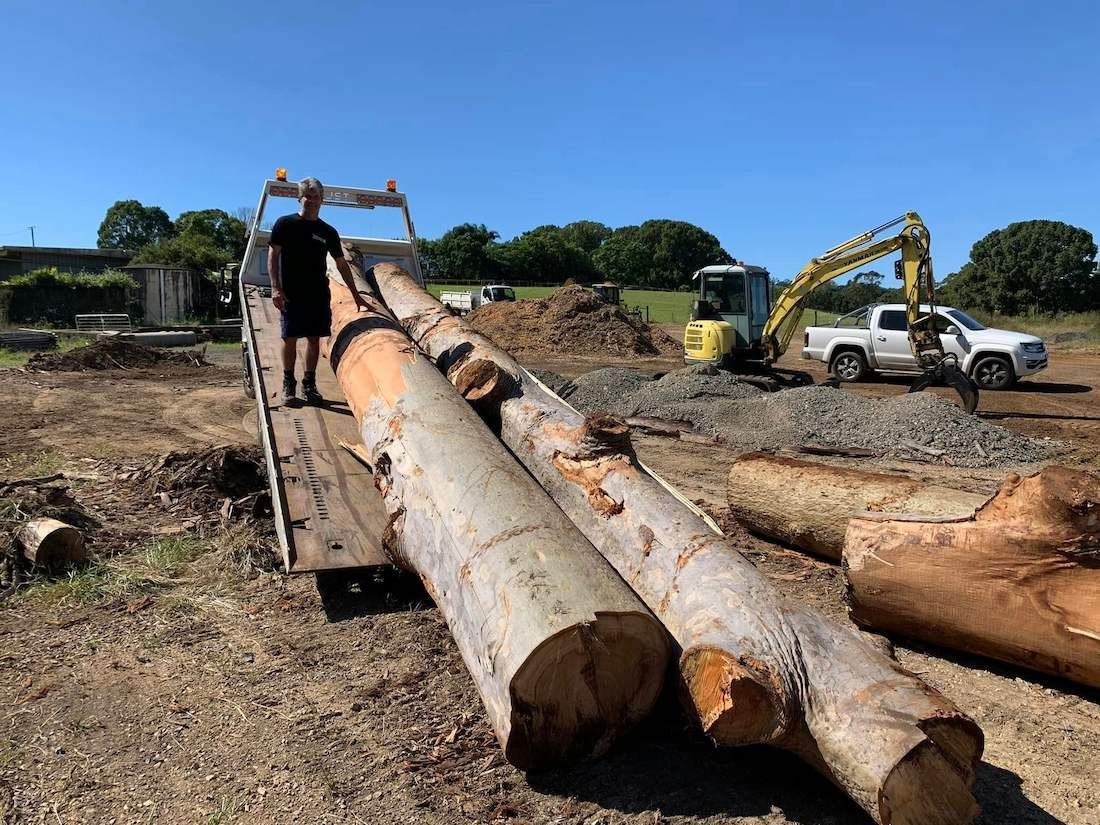
Tree removal is not a fixed-cost exercise. The condition of the tree, the complexity of the access required and the risk to surrounding property all influence what a job involves and what it costs. A tree in early decline that can be climbed and sectioned down methodically is a very different proposition to a tree in advanced decay that can no longer be safely ascended and requires a crane, specialised rigging or significant protective measures for nearby structures.
Waiting doesn't just mean paying more for the same job. It often means the nature of the job changes entirely. Trees that have deteriorated significantly may also need to be removed in emergency conditions, after a storm event or partial failure, which attracts emergency call-out rates and eliminates the option of planning the work at a time that suits the property owner's schedule or budget.
The Insurance and Liability Reality
This is the area where delayed action can have consequences that go well beyond the cost of removal. Most home insurance policies include provisions relating to trees that present a known hazard. If a property owner has been made aware that a tree is dangerous, whether through a formal assessment, a council notice, or even a conversation with a neighbour, and then fails to act before the tree causes damage, the insurer may decline the claim on the basis that the risk was known and unaddressed.
The liability exposure extends to neighbouring properties. In New South Wales, property owners have a legal duty of care with respect to trees on their land that could foreseeably cause damage to adjoining properties or people. If a tree you knew was compromised falls onto a neighbour's fence, vehicle, structure or, in the worst case, injures someone, the legal and financial consequences can be severe. The fact that the tree hadn't fallen yet is not a defence once it's established that the risk was known.
Byron Bay's Environment Accelerates the Problem
The Northern Rivers region is not a forgiving environment for trees already under stress. High rainfall, humid conditions and the prevalence of clay-heavy soils create conditions where root decay and fungal disease progress more quickly than in drier climates. Coastal exposure in and around Byron Bay adds wind loading that places additional mechanical stress on trees with compromised root anchorage or structural defects.
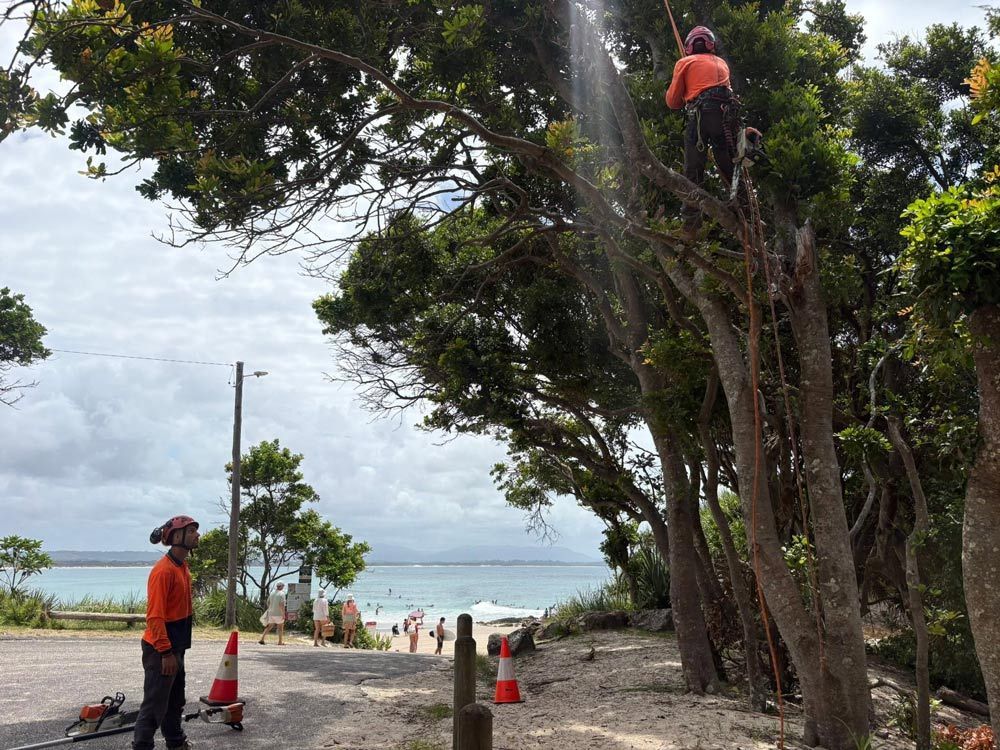
Trees that might hold on for several more seasons in a drier, more temperate climate can deteriorate rapidly in these conditions. Local knowledge matters when assessing how quickly a tree's condition is likely to change, and it matters equally when planning a removal safely in terrain that includes coastal vegetation, tight residential blocks and proximity to infrastructure.
The Procrastination Cycle and How to Break It
Most property owners who delay tree removal aren't being reckless. They're busy, the cost feels like a discretionary expense that can be pushed to next month, and the absence of an incident so far feels like evidence that things are probably fine. The problem is that this reasoning stays constant right up until it doesn't apply anymore.
The most practical way to break the cycle is to separate the assessment from the decision. Booking a professional inspection doesn't commit you to anything beyond understanding exactly what you're dealing with. It replaces the uncertainty that makes it easy to keep deferring with clear information about the actual risk level, the recommended course of action and what the work involves. From that point, the decision is an informed one rather than a guess.
Act Before the Tree Does
We at Tallow Tree Services work with Byron Bay property owners to assess, manage and remove hazardous trees before they become an emergency. If there's a tree on your property that you've been meaning to get looked at, now is the right time. Our team provides professional assessments and carries out tree removal in Byron Bay with the experience and equipment the job requires.
Get in touch today to book an inspection and take the uncertainty off the table.